


Retirement was supposed to mean one thing: finally getting out on the course 3 to 5 days a week. And after decades of a demanding career and family responsibilities, you finally have the time to play whenever you want.
But going from sitting at a desk all day to suddenly swinging a club four times a week can throw a major wrench in those plans.
You might find yourself dealing with a constant, mild throb or ache in your lower back; a flare-up of an old injury or something new you’ve never experienced before. Or maybe you’re experiencing neck/upper back pain during your backswing that affects your ability to keep your eye on the ball.
When you’ve lost conditioning and mobility over the years, it’s frustrating to feel like your body is holding you back right when you’re ready to play your best. With so much conflicting advice online, too much information from AI, and well-meaning input from your golf buddies it’s tough to know how to best fix the issue. The good news? Golf is a lifelong game and with a targeted plan built specifically for your body, you don’t have to put your retirement plans on hold.
Discerning Discomfort
Many golfers experience some sort of lower back discomfort as they ramp up in their frequency on the course. But, decades of sitting can lead to joint stiffness in the spine and tightness surrounding muscles, while core musculature loses the strength, endurance, and coordination needed to stabilize the spine and move well.
During the swing, if your spinal joints lack rotation or your deep core muscles lack strength, your body compensates by twisting through other areas or increases the force on the stiff joints and tissues in the back. This situation can cause pain either locally in the back or in another area of the body
Paying attention to your symptom type is essential: a continuous, dull ache often signals an overloaded tissue: muscle fatigue, joint stress, or mobility issue.
A sudden, sharp pain during your swing may indicate nerve irritation, an acute muscle strain, or acute ligament sprain. Because these two situations stem from different underlying issues, they require distinctly tailored physical therapy strategies rather than a one-size-fits-all approach.
Shoulders and Neck in Your Swing
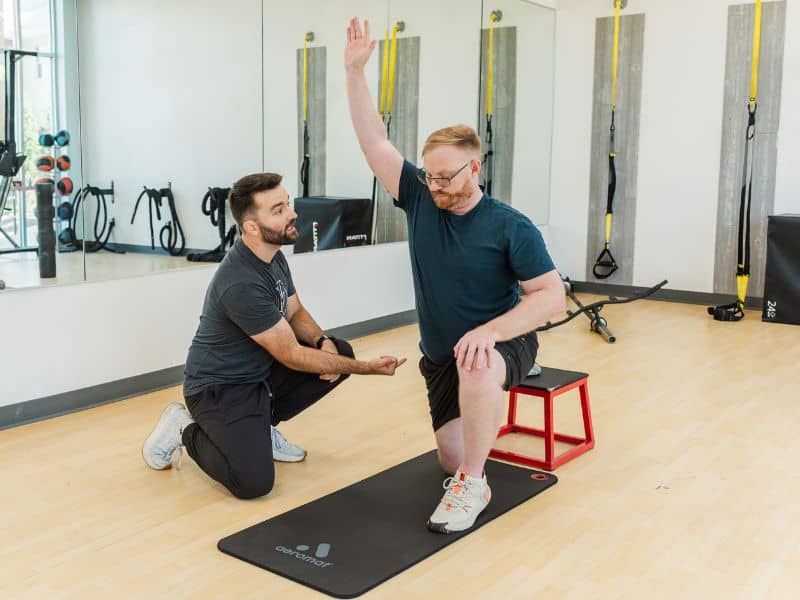
The shoulder and neck complex plays a vital role in reaching a full backswing and maintaining posture through impact. Unless properly maintained, the flexibility of the chest and back muscles, combined with stiffness in the thoracic spine (upper back), can limit your backswing and place increased stress on the shoulder and neck.
When your upper torso lacks mobility, your movement patterns break down and can force the shoulder joint to over-rotate at the top of the swing or over rotate the neck to keep your eye on the ball. This inefficient distribution of force places excessive stress on the shoulder joint or muscles as well as the neck musculature or cervical spine.
The neck and shoulder complex are intricately linked and rely upon each other operating as optimally as possible to minimize undo stress. It can be uniquely difficult to determine the root cause of shoulder and neck pain during a movement as complex as the golf swing.
A comprehensive evaluation of the neck, shoulder, and movement patterns is essential to sustained recovery.
What’s In the Hips?
The hips are another important part of the golf swing for power, mobility, and longevity of play. When your hips cannot rotate properly during the swing, your movement pattern compensates by increasing the demands on the lower back and shoulder/neck complex.
In the golf swing, all these areas are connected which is why it is so common that pain in one region is affected to another region. Internal and external rotation range of motion are often discussed as important for golfers and is essential for proper hip motion during the swing. However, rarely is strengthening these muscles and planes of movement discussed.
Just like any other training program, it’s important to strengthen these motions after improving the mobility for improving power and health of the muscles and joints to prevent pain.
A deep, dull ache in the outer hip or glutes after 18 holes could suggest muscular strain and joint stiffness from poor conditioning. On the other hand a sharp, pinching sensation in the front of the hip joint during weight transfer or rotation could indicate potential labral irritation, joint impingement, or even referred pain from the back.
Hip pain can be especially frustrating as, depending on the issue, you can have pain with merely walking the course or sitting in the golf cart.
Non-Traditional Focus Areas
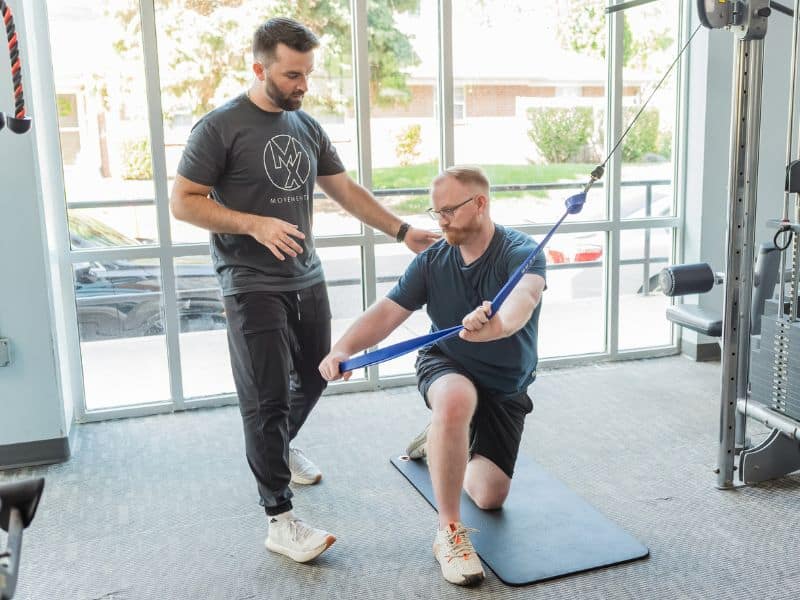
Beyond the typical areas of focus, other non-traditional golf injuries such as knee ligament injuries, wrist tendonitis, plantar fasciitis, and declining balance frequently sabotage your game.
While these issues might not arise from or be felt during the golf swing itself, they directly undermine your ability to enjoy the game. Foot pain and knee pain can alter your weight transfer, wrist stiffness prevents proper hinge and release, and poor balance destabilizes your entire swing foundation, increasing your fall risk on steep bunker slopes or wet fairways.
These limitations drain your energy, compromise your safety on the course, and rob you of the pure enjoyment of the game. Addressing these secondary constraints is just as critical as fixing your back or hips if you want to play 18 holes with complete confidence.
That personal guidance is where MovementX and a performance physical therapist make all the difference.
By systematically working through your back pain and rebuilding your posterior chain, you don’t just get relief, you walk away feeling educated, knowledgeable, and completely empowered to manage your body long-term.
You’ll know exactly the cause of your symptoms and how to keep playing golf pain-free for years to come.
Don’t let a back flare-up keep you from that upcoming tournament; get the tailored plan you need to play with confidence, power, and freedom.
About the Author

Dr. Ryan Krueger is a physical therapist based in the greater Indianapolis, Indiana area, with a strong foundational background in athletic training. He specializes in orthopedic rehabilitation and injury recovery for a wide spectrum of individuals, ranging from professional athletes and tactical military operators to weightlifters, runners, and active older adults. Whether your goal is returning to active duty, stepping back onto the competitive field, or simply walking around your neighborhood without pain, Ryan is dedicated to creating a personalized plan to help you get back to what matters most.
Share This Page
Related Resources
Found this page interesting? Discover more insightful resources below.