


CrossFit demands a lot, but it demands more from your shoulders in all the overhead movements we have in the sport. Think about it… snatches, jerks, thrusters, wall walks, handstand pushups, DB snatches, KB swings to name a few.
Learning a movement is one thing, but then not being able to get into proper positioning is even more burdensome. Every time you look at the whiteboard and see one, or a combination, of these movements, how does it make you feel? Thoughts might creep in like “I have to scale this… again”, “I just don’t understand how that young whippersnapper can get his arm that far over his head”, or “Every time this movement shows up it pinches my shoulder, but I’m going to do it anyways even if I’m sore for a few days afterwards.”
Mobility Can Be Regained
This lack of mobility is multi-faceted. At one point in your life, you had this mobility at hand. When you were a baby or toddler, even adolescent, you had it. And at some point, you lost it.
The main thing to remember here is that you can get it back. Maybe not all of it like when you were a toddler, but the amount needed to do the movements at CrossFit? Absolutely.
Regaining your mobility involves re-educating your system on how to properly get overhead. The tightness you likely feel is the result of you most likely not having the shoulder mobility needed before you started CrossFit 8 years ago. Then, you jumped into metcons that demanded this mobility. And unfortunately, doing metcons for shoulder mobility doesn’t work.
You need a structured plan and system, specific to you and your shoulders, not based on what other people in your CrossFit community can or can’t do.
A Structured Plan for Shoulder Mobility
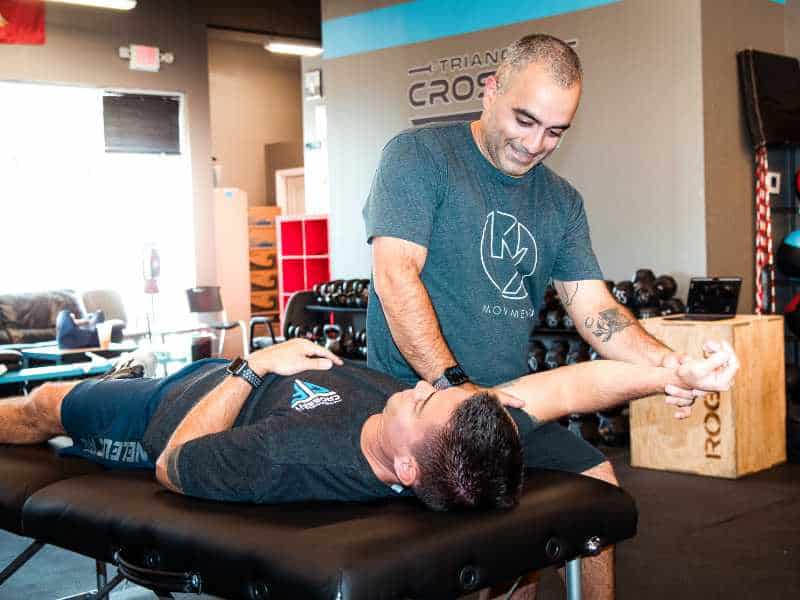
Building your shoulder mobility means working on it separately from class workouts. This can be at home, before the workout, after the workout, throughout your workday, and so on.
You (most likely) didn’t pop up on the pullup bar one day and do a bar muscle up. It took time, drilling, coaching, cuing, failing. Mobility has the same progression as any other skill. And I’d argue it demands even more discipline because it’s usually not as fun to work on as a bar muscle up or handstand walking. However, over time better mobility means improvements across the board.
Here are some key areas that I’ve seen limit shoulder mobility. When it comes to where I start looking for limitations and how to improve them, these are the greatest hits:
Shoulder Blade Mobility
Your shoulder blade doesn’t move well (the shoulder blade moves when you put your arm overhead). I say this all the time to my patients:
“A shoulder blade AND a shoulder joint that move together and work together have much fewer issues.”
The shoulder blades help guide the shoulder joint. If the blade isn’t moving or you’re keeping it down and back all the time (a coaching cue I hear a lot), then most of the motion happens solely at the joint, which is not ideal!
Rotational Control at the Shoulder
Poor control in rotation at the shoulder (control and stability at your rotator cuff). Turn your thumb down and try to reach overhead. Some of you will likely get a pinch or even a little bit of pain. Now turn your thumb up and reach overhead. Most likely a smidge better. Better control in rotation helps the shoulder create stability in overhead movements, especially when lifting heavy. Learning how to have proper control here is crucial.
Upper Back Mobility
Poor mobility in your upper/middle back also contributes. I hear you, “Whoa, whoa, whoa I thought we were talking shoulders!” We are, and your upper back has a huge influence across your shoulder girdle. Try to slump your upper back and reach overhead (it doesn’t work well). Upper/middle back mobility is crucial for shoulder health and mobility.
These areas of your shoulders and upper back combine into the movement system I mentioned earlier. Strength in one area doesn’t eliminate weakness in the others. Having a well-developed system usually performs better than a single, highly developed part of the system alone.
When Mobility Issues Persist
Let’s say you do some basic exercises and movements to target the above areas. What if that alone doesn’t fix it? There are other factors at play other than the main ones from above. Maybe it’s technique with the barbell or gymnastics and not as much mobility as we thought.
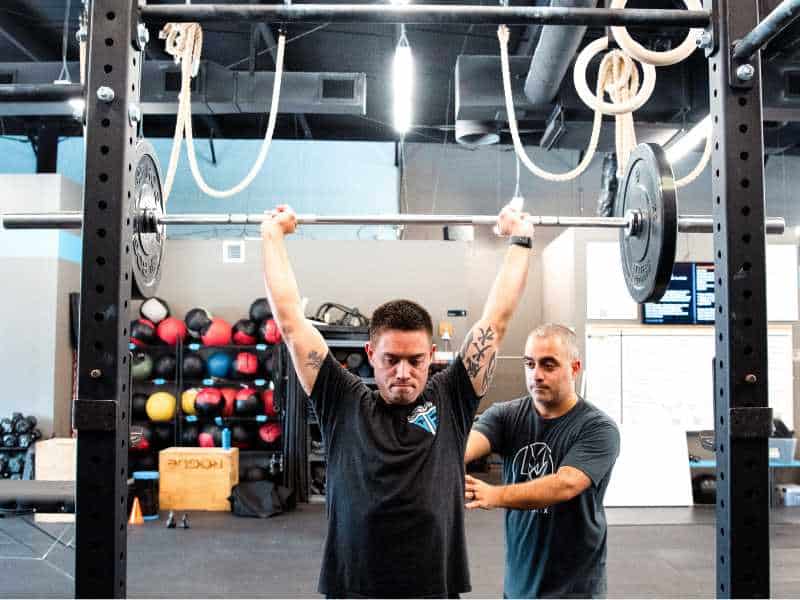
I’ve seen this before. You could have great shoulder blade motion, great rotator cuff strength and great middle back mobility but struggle with the mechanical sequencing of a snatch that doesn’t hurt.
If adjustments on your own don’t work (or you want to get to the bottom of it faster) working with a dedicated movement specialist (like me) can help look at the pieces, how they fit together, and where the highest impact interventions live. I work with CrossFit athletes all the time and I’d love to help you.
The Road to a Stronger Shoulder System
Shoulder mobility problems are abundantly present in CrossFit athletes. The demand of the sport points out who these people are real quick.
By now, you should have a better understanding that it’s not just stretching that is required to work on your mobility. It’s the shoulder blade motion, the rotator cuff control and the mobility in your upper/middle back. By restoring the system’s pieces above, movements like snatching not only have better mobility and positioning, but come with confidence again.
And if you’ve made it to the end of this article, you probably are (or know) one of them. At one point, shoulder mobility wasn’t an issue for you, but now it is. If this sounds like you, struggling to reach into your cupboard for the highest coffee mug, let alone overhead squatting, then continuing to struggle through workouts is not the fix. And over time it can actually lead to more problems.
The good news is I treat CrossFitters with these problems every single week and guess what? They improve. If you want to continue in your CrossFit or lifting journey, but are road blocked by shoulder mobility issues, I would love to help you like I’ve helped countless others.
About the Author

Dr. Caleb Overholser is a rehabilitation chiropractor and Certified Strength and Conditioning Specialist based in the Raleigh, North Carolina area. He specializes in sports rehab and movement analysis for CrossFitters, weightlifters, runners, and overhead athletes, treating everything from acute orthopedic injuries to complex lifting mechanics. Drawing from his extensive background as a Division I strength coach, Caleb blends hands-on care with tailored corrective exercise to address the root cause of pain rather than just providing short-term relief..
Share This Page
Related Resources
Found this page interesting? Discover more insightful resources below.