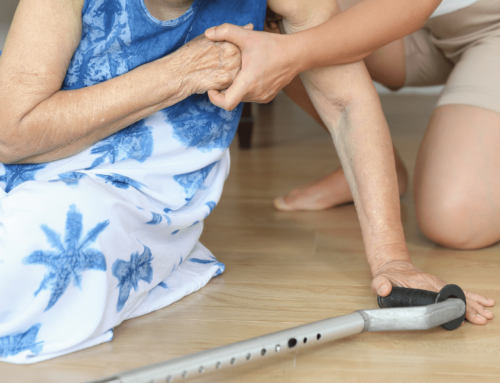



Entering retirement is an exciting time. More freedom of time allows for an amazing opportunity to increase activity, especially if your job was mostly sedentary.
If your body isn’t used to it, increasing activity level can come with some aches and pains that benefit from a plan to address before they turn into larger issues.
Some of these things are easy to put off when life is busy. That knee that has been flared up on and off, feet that act up with longer walks, a cranky low back with bending or lifting.
Let’s take a closer look at the mechanisms that will help you go from being mostly sedentary to walking 10k+ steps per day while traveling, enjoying hobbies and spending time with friends and family, maybe even chasing grandkids.
Strength Training
Strength training is safe and helpful at any age, with well-documented benefits for bone density, fall prevention, muscle mass preservation and chronic illness management.
Finding the appropriate dose of challenge and movements that feel good on your body can be a bit of a Goldilocks situation to start but once a program is established it can be maintained and built upon as you get stronger to continue to improve strength. As a starting reference, the CDC recommends at least 2 days a week of strength training for older adults (1).
And good news; we can gain strength at any point throughout life. There isn’t a point where we can’t get stronger, which means there isn’t a point where we can’t counteract the loss of muscle mass (and therefore, strength).
The medical term for loss of muscle mass is sarcopenia. And the more sedentary one’s lifestyle is, the worse sarcopenia tends to be and the more age related strength changes will manifest. Research shows that it can be slowed and even reversed with the appropriate level of strength training (2).
Here are a few quick activities to think about or tests of strength that can be done at home:
- Can you rise from a chair without using your arms?
- Can you rise from the floor without using your hands?
- Can you ascend and descend stairs without the railing?
- Can you rack your suitcase in an overhead compartment without assistance?
- Can you carry two ten pound grocery bags up a flight of stairs or one block without a break?
If any of these activities are a challenge, a personalized strength program can help you train to meet your functional goals.
For example, a squat mimics getting out of a chair, a split squat or lunge can help with getting off the floor, overhead press can help with racking a suitcase and a farmer’s carry helps train for lifting/carrying groceries.
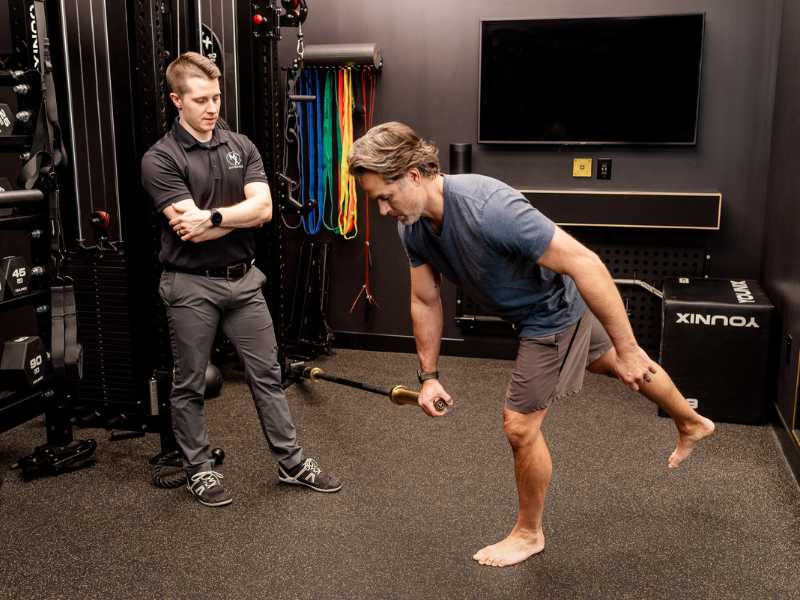
Cardio
Returning to the CDC guidelines, the recommended amount of cardio (cardiovascular exercise) is 150 minutes per week of moderate-intensity aerobic physical activity or 75 minutes per week of vigorous-intensity aerobic physical activity (1).
A combination of both types that lands between 75 and 150 minutes is also a viable option.
Finding what activities fit the category of moderate to vigorous is often based on how hard the activity feels and how much it elevates your heart rate while completing it. A brisk walk is typically moderate where a jog or run is typically vigorous.
If 150 minutes feels daunting, I find it helps to think about it like stacking together exercise snacks. 10-15 minute bouts of exercise can add up throughout the week.
Even moreso, sticking with types of cardio you enjoy (often called adherence) tends to be much easier than staying rigorously disciplined to do cardio you dislike.
Many people get joy out of tracking their steps and aiming to hit a daily target (called “closing rings” on certain apps).
Others exercise in a group setting with games, classes, or other social forms of movement. Pickleball, yoga, walking and hiking groups are all good examples of this.
Find activities you enjoy, then aim to modify the time and intensity you’re doing them each week to build your capacity over time.
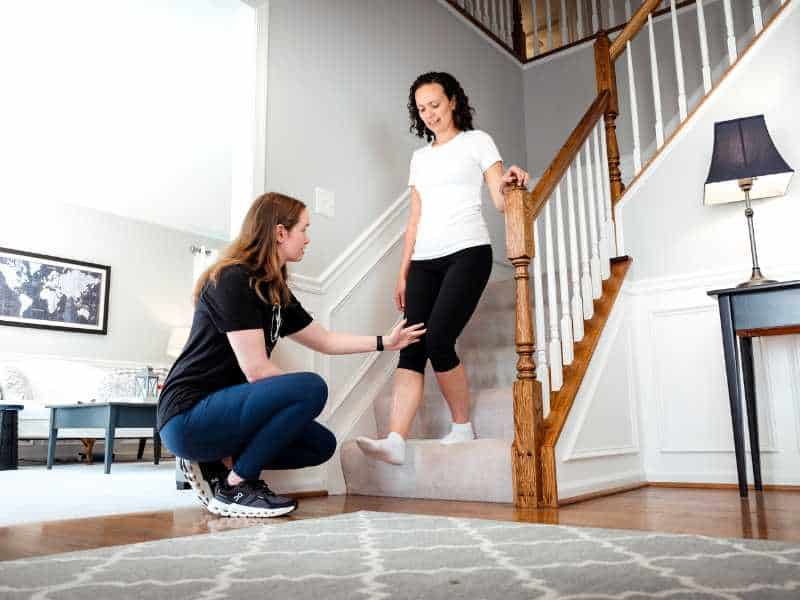
Balance
Feeling steady on your feet and preventing falls is often top of mind as we age. Being proactive about developing and maintaining your balance before it’s a noticeable issue is a great state to be in.
Balance pulls from strength, but there are other factors to consider as well. Often I see balancing on one leg recommended as a generic option for working on balance and as great as this is it doesn’t generally tell me that much about how someone’s balance is when they are moving.
If we were in a session together, I’d assess your balance by looking at:
- Can you easily navigate walking on uneven surfaces?
- If you caught your toe in a crack on the sidewalk would you confidently catch yourself?
- Do you hesitate to walk outside in the snow/ice?
- Can you get on and off an escalator without using the handrail?
- If you are in a dark room or have your eyes closed do you feel unsteady on your feet?
Types of balance
In addition to the general indicators of balance, there are three primary types of balance that can be looked at individually: static, anticipatory and reactive.
Static balance is what allows us to be upright in a position sitting or standing still without tipping over. Exercises like balancing on one leg help with this type of balance. Often that isn’t enough to cover training the other facets of balance.
Anticipatory balance is the body’s ability to anticipate what it needs to do to maintain balance with preparing for movement. For example, the preparation to step on to an uneven or moving surface like an escalator.
Reactive balance is key to preventing falls as this is a person’s ability to sway, adjust stance or take a step to catch themselves if something throws them off balance. This type of training can be most effective to start with a physical therapist present to ensure safety.
All three types are part of a well-developed sense of balance, and are worth being mindful of as part of our general movement ability as we age.
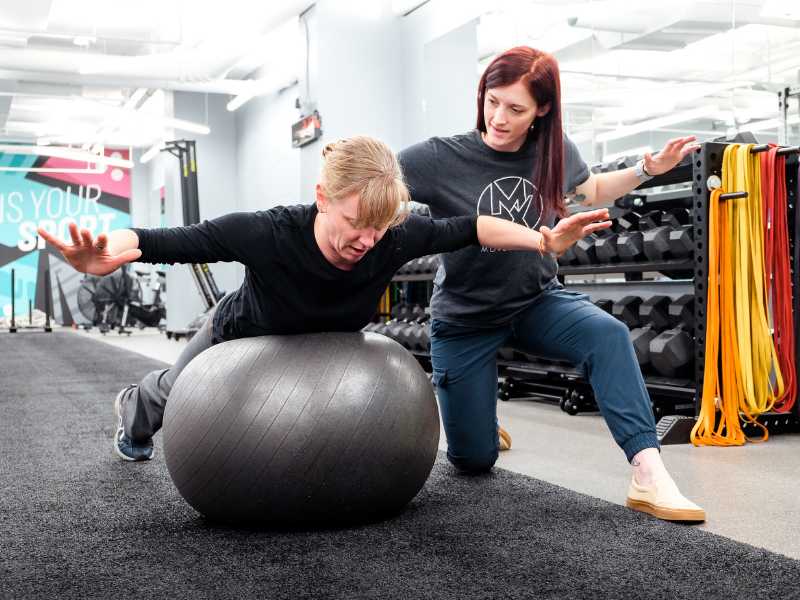
Moving Forward
Retirement is one of the few times in life where you get to fully decide what your day looks like. Strength, cardio, and balance are not separate boxes to check; they work together to build the foundation that lets you do what matters most to you.
The good news is that none of this requires perfection or a gym membership. It requires consistency, a program that fits your body and goals, and knowing when a little professional guidance can help you get there faster and more safely.
If any of the activities or questions in this article gave you pause, that’s useful information.
A qualified physical therapist can help you turn those gaps into a plan so that the extra time retirement gives you is spent doing what you love, not recovering from avoidable setbacks.
References
- What counts as physical activity for older adults. Centers for Disease Control and Prevention. Accessed May 14, 2026. https://www.cdc.gov/physical-activity-basics/adding-older-adults/what-counts.html#cdc_generic_section_2-muscle-strengthening-activities.
- Mayer F, Scharhag-Rosenberger F, Carlsohn A, Cassel M, Müller S, Scharhag J. The intensity and effects of strength training in the elderly. Deutsches Ärzteblatt international. Published online May 27, 2011. doi:10.3238/arztebl.2011.0359
About the Author

Dr. Mollie Kam is a physical therapist and certified Athletic Trainer based in the Washington, D.C. and Arlington, VA areas. She specializes in treating athletes, active adults, and seniors, with deep expertise in managing complex medical histories like hypermobility (EDS/HSD), dysautonomia (POTS), and long COVID. Dr. Mollie believes in active listening and relationship-building, ensuring patients understand the “why” behind their care while building a foundation of trust. Her mission is to empower people to take charge of their recovery, self-manage their symptoms, and seamlessly incorporate physical therapy into a broader wellness plan for long-term health.
Share This Page
Related Resources
Found this page interesting? Discover more insightful resources below.