


There’s a type of hiccup I see a lot in my practice as a physical therapist with high-performing athletes: You’ve just crushed two solid weeks of Rx workouts, the stubborn pain is finally ghosting you, and you’re starting to move at a high-level again. Then, right in the middle of a heavy metcon or a technical gymnastics session, a flare-up hits.
Your immediate thought? “I’m right back to square one. This is never going away.”
Take a breath. It’s not over, and your progress hasn’t vanished. In fact, you are exactly where you need to be to break the cycle of chronic, recurring injuries.
The Myth of Straight Line Progress
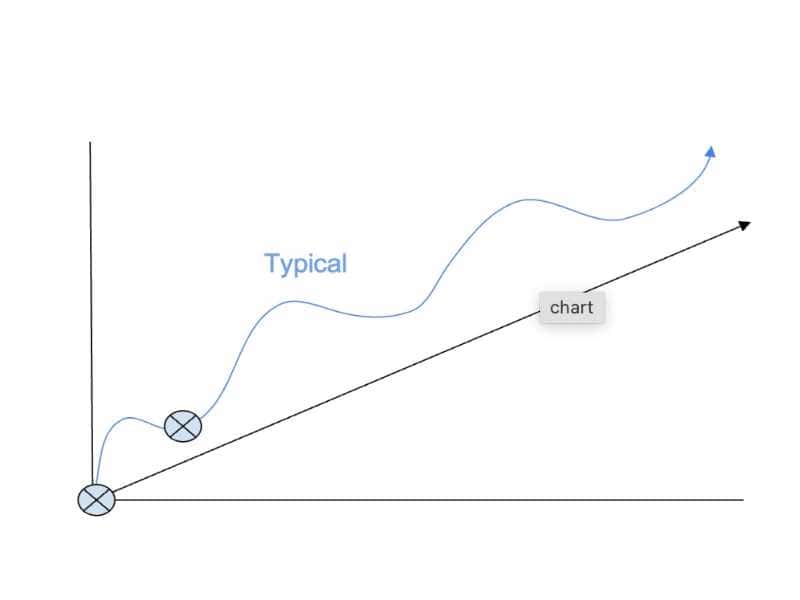
When you’re used to pushing hard and tracking progress by the leaderboard, it’s easy to assume rehab should follow a predictable, upward trajectory. We want recovery to be a perfectly diagonal line moving up and to the right toward “100% pain-free.”
In reality, athletic progress is a jagged line that sometimes goes down before going up. If you’ve tried PT in the past only to have the same issue creep back the moment you up the intensity, you know how frustrating that plateau can be.
Here’s the perspective shift to lower your heart rate: a spike in symptoms isn’t a sign of failure; it’s a sign of adaptation.
As your physical therapist, my job isn’t just to make you comfortable; it’s to push you safely. To get you back to hitting the Rx button consistently, we have to progressively load your tissues so they can handle the high demands of your activity, whether that’s CrossFit, ring routines, or heavy doubles.
When we “level up” your program, whether that’s adding weight to the barbell/increasing volume/introducing high-impact movements, we are testing your current ceiling. Occasionally, we find it. A mild increase in symptoms simply means we located the exact edge of what your body can tolerate right now.
Look at the big picture. Even if you’re feeling a bit beat up today, is the movement quality and pain level the same as Day 1? Probably not. You are still trending upward, even if today feels like a dip in the chart.
Detecting Your Thresholds
If things feel a bit spicy after a workout, don’t panic. You haven’t broken anything or undone your hard work; you’ve gathered valuable data. Breaking the cycle of recurring injuries requires looking past strength and mobility alone and analyzing how you move and recover.
When a flare-up happens, we audit the variables together:
Movement Efficiency
Did fatigue cause your positioning to break down during high-skill or high-rep movements?
Volume & Intensity
Did you push the pacing or weight a bit too early before your foundation was locked in?
Recovery
Did your sleep, hydration, and stress management match the physical demand you put on your body? Remember, just doing PT and gym sessions isn’t enough if the recovery tank is empty.
Usually, the “fix” isn’t a hard reset or weeks of rest. It’s a temporary scale-back or a tactical tweak to your movement mechanics. It’s a pivot, not a penalty box.
The New Definition of 100%
True athletic longevity isn’t about being perfectly pain-free 365 days a year; it’s about body literacy. The most successful athletes in the gym aren’t the ones who blindly push through a flare-up until something snaps. They are the ones who know how to listen to their bodies.
Working through this process teaches you the ultimate competitive advantage: knowing when to pull back, how to move with elite efficiency, and understanding that a strategic rest day is a performance enhancer, not a lost opportunity.
A flare-up is just data. It highlights where your current limits are so we can systematically move them. If you’re experiencing a bump in the road, don’t ghost your rehab or just try to train around it. Reach out. We’ll adjust the plan, refine your movement, and keep moving the needle forward.
Keep your head up and stay the course. The only way out is through.
About the Author

Dr. Valerie Lentine is a physical therapist and performance coach based in the Raleigh and Cary, North Carolina area. She treats a wide range of active individuals, specializing in orthopedic rehabilitation and sports performance for team sport athletes, powerlifters, CrossFitters, and active seniors. Utilizing tailored strength programming and tools like functional dry needling, Dr. Val’s mission is to optimize movement mechanics and help people accomplish physical goals they never thought possible.
Share This Page
Related Resources
Found this page interesting? Discover more insightful resources below.