


You survived those first six weeks with your new bundle of joy and were finally cleared to return to exercise and intimacy. You were excited to return to the activities you love, the things that make you feel like you again. Perhaps dreaming of crossing the finish line of your first 5k or 10k postpartum, confidently back at your Hyrox training, or excitement about returning to your gym for your strength training, or looking forward to feeling comfortable and joyful being intimate with your partner, only to be met with pelvic heaviness, pelvic pain, a bulge, or a persistent dragging sensation.
This is likely not the recovery you expected.
The feeling isn’t just physical discomfort; it’s a mental roadblock. It leaves you scared to move your body, hesitant to lift your child, and anxious about returning to intimacy with your partner.
If you’re struggling with this pelvic heaviness, bulge, or dragging sensation, please know that you are absolutely not alone.
Pelvic organ prolapse (POP) affects 1 out of every 5 people assigned female at birth worldwide (1). Let that sink in the next time you’re at the park with your little one. These symptoms don’t have to be your permanent normal. This article will guide you from symptom-restricted fear into functional freedom, helping you stop stressing about pelvic symptoms so you can confidently and safely reclaim your body and your life.
What Is Pelvic Organ Prolapse (POP)?
Pelvic Organ Prolapse (POP) is the descent of your pelvic organs (bladder, uterus, and rectum) from their typical positions. This happens when the supportive tissues for the pelvic organs (ligaments, fascia, and pelvic floor muscles) become weakened and can no longer support the organs which cause them to descend into the vaginal canal.
Types of Pelvic Organ Prolapse
Types refer to which organ has moved and stages refer to where the organ descends in relation to the opening of the vaginal canal (the introitus).
Anterior wall descent
Typically involves the bladder descending and bulging into the front wall of the vaginal canal. This is also called a cystocele and is the most common type of pelvic organ prolapse (2).
Urethrocele
The urethra descends and bulges in the vaginal canal and is typically seen accompanying a cystocele.
Uterine Prolapse
The uterus descending in the vaginal canal.
Vaginal Vault Prolapse
This occurs in individuals who have had a hysterectomy; the top closure of the vaginal canal (the vaginal vault) descends in the vaginal canal.
Posterior Wall Descent
Typically involves the rectum descending and bulging into the posterior wall of the vaginal canal which is also called a rectocele.
Enterocele
A portion of the small intestine descends into the vaginal canal.

Stages of Pelvic Organ Prolapse
The stages of POP simply refer to how far the prolapsed organ has descended relative to the vaginal opening (introitus)
Stage 1: The Feeling, Not The Visual
At this stage, the organ has dropped slightly and is still very high up. Your symptoms may still include the heaviness or dragging sensations after activity or end of day.
Stage 2: The Bulge Reaches The Threshold
The prolapse has reached the opening of the vaginal canal or slightly past it. This is the stage where you will most likely see “the bulge” or feel tissue right at the entrance of the canal.
Stage 3 and Stage 4: Clearly External Bulge
At these stages, the bulge is visible outside the vaginal opening. The stages differ in the total amount of descent.
Why POP Symptoms Seem To Come And Go
One of the biggest mental blocks of pelvic organ prolapse, is that symptoms seem to fluctuate. You can feel nothing one day and everything the next. This can make you go through your day with a fine tooth comb to try to figure out just what happened.
The reality is, symptoms can vary greatly without the stage actually getting worse nor did you do something to cause the increase in your symptoms. There are 3 main key factors for these variations:
Time of Day Makes a Difference
Symptoms are generally worse towards the end of the day because they are heavily influenced by gravitational forces and the strain placed on the supportive structures (ligaments, fascia, pelvic floor muscles).
Mornings: People typically report their symptoms feel better. This is due to laying down while sleeping and allowing the pressure from gravity to be lifted off the supportive structures (ligaments, fascia, pelvic floor muscles).
Late Afternoon/Evening: Symptoms are typically worse during these times of day; especially if your day consists of long periods of standing (with or without the constant squat pulses to soothe your baby), walking, lifting and holding your child with or without baby wearing. The gravitational forces have accumulated and the supportive tissues have become fatigued.
Activity Level and Type of Movement
Some activities can create more pressure inside the abdomen which will temporarily push down on your pelvic organs making your symptoms more prominent.
Worse with:
- Activities that increase intraabdominal pressure such as lifting (yes lifting your child counts)
- High impact activities such as running, jumping, high intensity stationary or in the wild bike rides
- Straining with bowel movements (please stop)
This is a sign that the supportive structures are not yet able to manage the load being placed on them.
Better with:
- Internal or external support
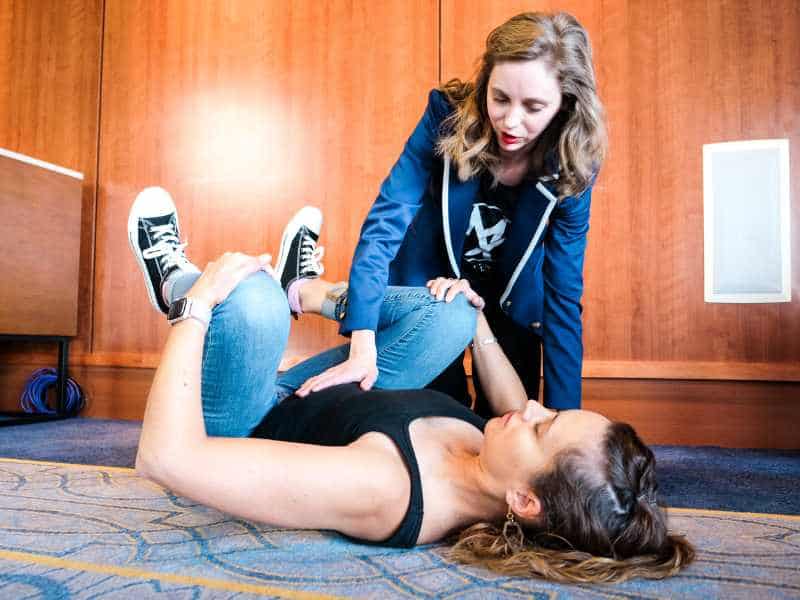
- Changing positions where pelvis is above heart
- Laying down, resting
These positions temporarily decrease the load and allow the pelvis support structures to recover and ease your symptoms.
Hormonal Cycles and Shifts
Your symptoms can change based on where you are in your menstrual cycle.
Hormonal fluctuations can affect the connective and supportive tissues and influence how your ligaments and fascia support your pelvic organs. This is why you may notice an increase in your symptoms during the days leading up to your period.
Ok I Have A Prolapse, Now What?
Now that some of the mental roadblock may be removed with some peace of mind that increased and inconsistent symptoms don’t mean the stage is getting worse, let’s discuss next steps.
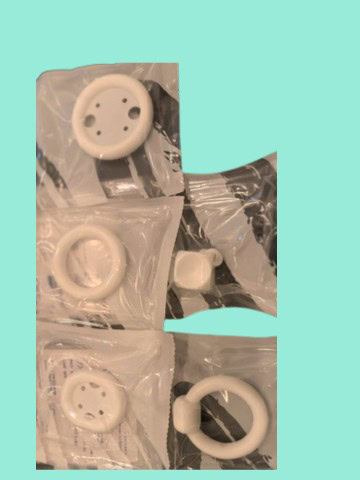
Internal Support: Pessaries & OTC Options
Internal support can be a fantastic way to conservatively manage prolapse and give you the functional freedom to return to the things you love without those nagging heavy, draggy feelings. This type of support is inserted into the vaginal canal to physically prevent the organs from dropping down.
- Over-the-Counter (OTC) Options: For mild or temporary support, over-the-counter options like a super tampon or Revive can be helpful.
- Pessaries for Long-Term Use: For long-term or consistent management, a fitted pessary is a great option. It is often more cost-effective and environmentally friendly, as we usually only recommend replacing it once a year, assuming the device remains intact.
- Flexible Wearing: Some people choose to wear their pessary daily, while others wear them only during high-impact activities that normally bring on their symptoms, such as running or lifting.
- Finding the Right Fit: Pessaries come in several different shapes and sizes (the Ring pessary is a great option for about 70% of people with prolapse). Most types can be easily managed and removed independently at home, or with the help of a partner.
- The Fitting: The device must be properly fitted by a trained professional, which could be a Urogynecologist, Gynecologist, or a trained Pelvic Health Physical Therapist.
A Note on Pregnancy: Though pessaries are usually very safe to wear during pregnancy, please check with your OBGYN or Midwife prior to continuing use.
Research To Watch: There’s some exciting research underway to identify if long term pessary use can improve your prolapse stage. The regenerative theory is that by giving the supportive structures (ligaments and fascia) a chance to be “on slack” while the pessary holds the organs, these tissues may be able to regenerate and heal. This could be a game changer for conservative management! We’ll be staying tuned to see what the data shows (4).
External Support
For those individuals who are not ideal candidates for a pessary, external support options are also available.
How They Work: The intention here is to decrease the stress on the pelvic floor muscles and supporting structures by managing external and internal pressures. While these garments don’t prevent the organ descent outside the vaginal canal, they can help hold the organs inside the canal and decrease your symptoms.
What They Look Like: These are specialized undergarments that provide support around the vulva and, specifically, the perineal area. They can range from supportive underwear to athletic pants or even similar to a jock strap.
The 360 Breathing Strategy
Your core, diaphragm, and pelvic floor are designed to work together as a synchronized system to manage pressure in your abdominal cavity.
On the Inhale (Relax): When you take a breath in, your diaphragm moves down, and your core and pelvic floor muscles gently relax and lengthen.
On the Exhale (Support): When you breathe out, these muscles naturally rebound into a mildly contracted, supportive state.
Learning to breathe three-dimensionally into your ribs (360 Breathing) helps decrease unnecessary downward pressure on your abdominal cavity and supportive pelvic structures, while simultaneously building awareness in your body.
The KNACK: Your Protective Tool
The Knack is a powerful, immediate technique you can use throughout the day, especially when lifting your child or weights. It’s essentially a protective pre-contraction that helps build coordination between your breath and your pelvic floor muscles.
How to do it: Just prior to lifting, begin to exhale and simultaneously contract your pelvic floor muscles.
Why it works: This pre-emptive strategy supports your pelvic floor and manages the spike in pressure that lifting causes, offering immediate protection against symptom flare-ups.
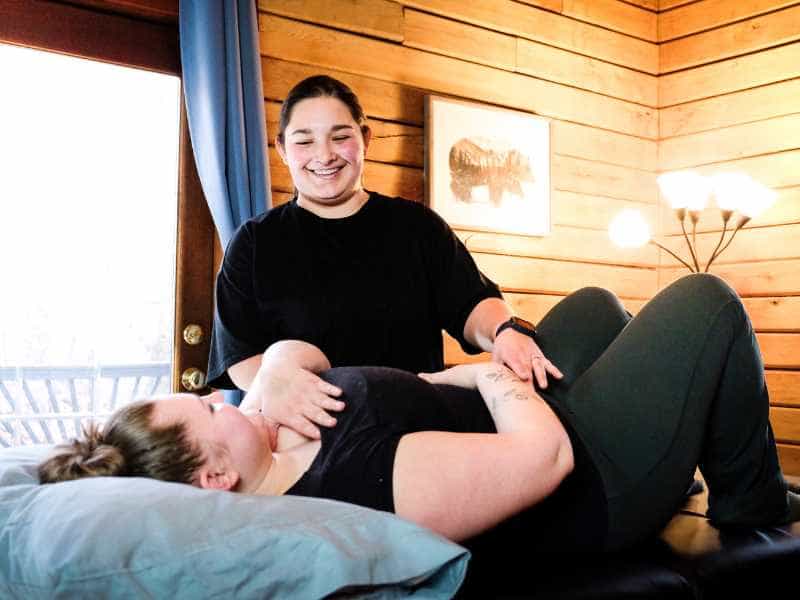
Re-Tune The Pelvic Floor
It is completely natural for anxiety about prolapse to cause people to constantly contract their core and pelvic floor muscles. Whether consciously trying to “keep things inside” or unconsciously bracing out of fear, this constant tension is counterproductive.
The pelvic floor is made of skeletal muscles, just like your upper trapezius (shoulder) muscles. We know that if we constantly hold tension in our shoulders, they become sore, stiff, and fatigued. The same thing happens below with:
Worsened Symptoms: Constant bracing increases the downward pressure on your pelvic organs, which can make the sensation of heaviness or the bulge feel worse.
Muscle Fatigue: A constantly contracted muscle cannot perform its job effectively. It fatigues quickly, which ironically weakens the pelvic floor over time and increases the risk of compensation from other muscles.
Loss of Coordination: To function optimally, the pelvic floor needs a full range of motion: contracting, resting, and lengthening.
The biggest mental hurdle is letting go. Allowing the pelvic floor to relax and lengthen can feel terrifying, as you fear your organs might “fall out.” However, this ability to relax and return to a natural resting position is vital for preventing muscle fatigue and regaining the necessary coordination and awareness in your body.
Harness Gravity
Position is key when performing Kegels, engaging in strength training, or being intimate when dealing with pelvic organ prolapse. Depending on the specific organ prolapsing, adjusting your position can make a significant difference. The core idea is to use gravity to help draw the bulge away from the vaginal canal, which allows for a more effective contraction of your pelvic floor muscles (3).
Think of it like this: if you performed bicep curls with a towel roll tucked into your elbow, you wouldn’t get the full benefits of the exercise. The same concept applies here; we want to optimize your position to maximize muscle function.
Strength Training/Kegels
Apply this principle by starting with positions that counteract gravity, such as exercises on your forearms and knees (like fire hydrants or donkey kicks) for anterior vaginal wall prolapse. Exercises on your back with pelvis above heart such as bridges or simply placing a pillow under your hips for posterior wall prolapse.
Intimacy
Similarly, let gravity assist with moving the prolapse. Positions where your pelvis is above your heart or when you are horizontal typically feel better.
End-of-Day Symptom Relief
If you finish an activity or it’s the end of the day and you feel that familiar pelvic heaviness or dragging sensation, use gravity for immediate relief. Lie down with your pelvis elevated above your heart. You can do this on your belly or back, whatever feels most comfortable. This is a great way to use gravity to gently “pull” things back inside and relieve symptoms.
Recover With Confidence
You’ve learned the fundamental strategies, from using gravity for symptom relief to how to use 360 breathing to stop stressing and start moving. Now, visualize your personal finish line: confidently lifting your child, enjoying intimacy, and reclaiming the activities you love, all while feeling secure, safe, and joyful in your body.
Crucially, remember that symptoms often fluctuate daily and increased awareness of a heavy or dragging sensation does not mean your prolapse stage is getting worse.
This isn’t the end of the journey, but the start of your functional freedom. If you suspect or have been diagnosed with prolapse, take the next step today.
Reach out to a pelvic health physical therapist, gynecologist, or midwife to address the underlying reasons why prolapse occurred and receive a personalized plan to progress your recovery.
References
- Nygaard I, Barber MD, Burgio KL, et al. Prevalence of symptomatic pelvic floor disorders in US women. JAMA. 2008;300(11):1311-1316. doi:10.1001/jama.300.11.1311.
- Bradley CS. Cystocele (prolapsed bladder). National Institute of Diabetes and Digestive and Kidney Diseases. Published March 2014. Accessed June 5, 2026.
- Ting WH, Liu YJ, Wu WY, Hsiao SM. Efficacy of pelvic floor muscle training using bio-assisted surface electromyography in women with pelvic floor dysfunction with and without pelvic organ prolapse. Presented at: International Continence Society Annual Meeting 2019; September 3-6, 2019; Gothenburg, Sweden. Abstract 661.
- Miceli A, Fernández-Sánchez M, Dueñas-Díez JL. How often should ring pessaries be removed or changed in women with advanced pelvic organ prolapse? A prospective observational study. Int Urogynecol J. 2021;32(6):1471-1478. doi:10.1007/s00192-021-04706-0.
Share This Page
Related Resources
Found this page interesting? Discover more insightful resources below.