


Are you scheduled for an upcoming pelvic surgery, or recently post-op? You may have had a hysterectomy, prolapse repair, bladder sling procedure, endometriosis resection, or even pelvic floor muscle injections performed in office or in OR. You are likely scheduled for a post-operative visit for clearance from your surgeon anywhere from 2 to 6 weeks after your procedure, but what are your next steps for recovery and return to full function?
Whether or not you had pelvic PT pre-operatively, having a comprehensive Pelvic Floor PT assessment and treatment post-op will help to guide your recovery and maximize the success of your procedure.
What is Pelvic PT and How Can It Help?
So what is Pelvic PT, and why do you need it? Pelvic Floor Physical Therapists undergo specialty training to address the musculoskeletal function of the pelvis and pelvic floor as it relates to bowel, bladder, sexual, and reproductive health and how it works with your core muscles to manage pressure-generating activities, such as lifting, sneezing, or exercise (1). Symptoms pre- or post-op could impact any of these systems, and awareness of strategies and behaviors, treatment techniques, and progressive exercise prescription are key to safe and successful return to full activity both short and long term.
Breath Work
Breath mechanics are the foundation of a functioning pelvic floor and core (2), and the good news is that gentle breath work is safe to start working on immediately post-op!
Pelvic PT helps you to relearn breath coordination that works with, not against your pelvic floor to minimize pain and tension and reestablish functional mechanics. Here’s the basics of how it works: when you inhale, your diaphragm and pelvic floor muscles should descend together. This allows the pelvic floor to lengthen, so that on your exhale it can rebound and lift with your diaphragm.
Surgery and post-op pain or tension can sometimes disrupt this natural process, resulting in the pelvic floor feeling “stuck”. If this sounds like you, breathing is a fantastic place to start!
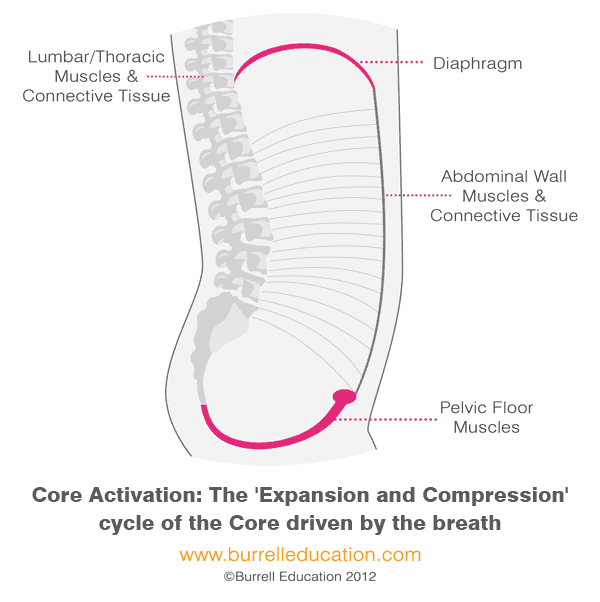
Figure 01 (Credit: empoweryourpelvis.com)
Pressure Management
Even the simplest movements (like getting out of bed or standing up) can become difficult or uncomfortable initially post-op. Along with deep breathing to reduce tension and guarding of the pelvic floor musculature, exhalation and gentle bracing during transitional movements can help to protect incisional and healing areas from increased pressure and pain (3).
Focusing on safe body mechanics such as logrolling out of bed, bracing to stand or lift, and returning to upright posture after surgery can be learned and practiced during therapy.
While “exhale with effort” sounds simple enough, it’s helpful to trouble shoot with a Pelvic PT to make sure you aren’t breath holding or bulging out your core to move – a common pattern when in pain!
Bowel and Bladder Health
Post-operatively it is imperative to prevent constipation and straining as they could have a negative impact on healing.
Anesthesia, pain medication, immobility, and reduced food intake can slow digestion contributing to constipation. Muscle guarding and tension can compound this as well as disrupt both bowel and bladder urgency and frequency. This could mean a decreased or increased sensation of when you have to urinate or defecate.
Alternatively, bowel and bladder dysfunction could have been the primary symptoms that led you to have surgery in the first place, with anatomical restoration by your surgeon making the post-op time period optimal for neuromuscular retraining (4).
A Pelvic Floor PT can help you to reestablish normal urge and routines, promote proper hydration, movement, and strategies for bowel and bladder health post op.
Pelvic Floor Assessment and Treatment
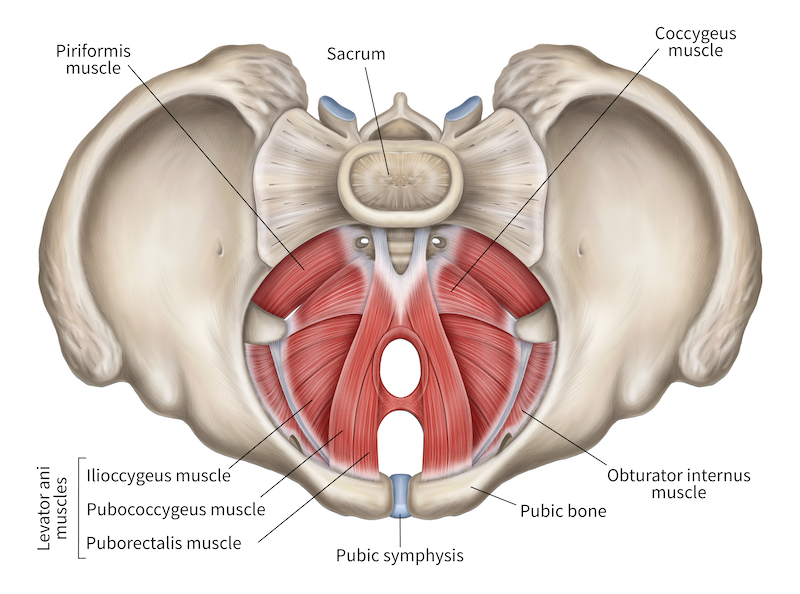
Once cleared for internal pelvic floor assessment and treatment by your surgeon, a Pelvic PT can perform a thorough evaluation of the muscles lining the pelvic bowl. This includes the:
Superficial muscles surrounding the vaginal opening often responsible for insertional pain with intercourse or menstrual products, bladder urgency, frequency, or trouble initiating and completing urination
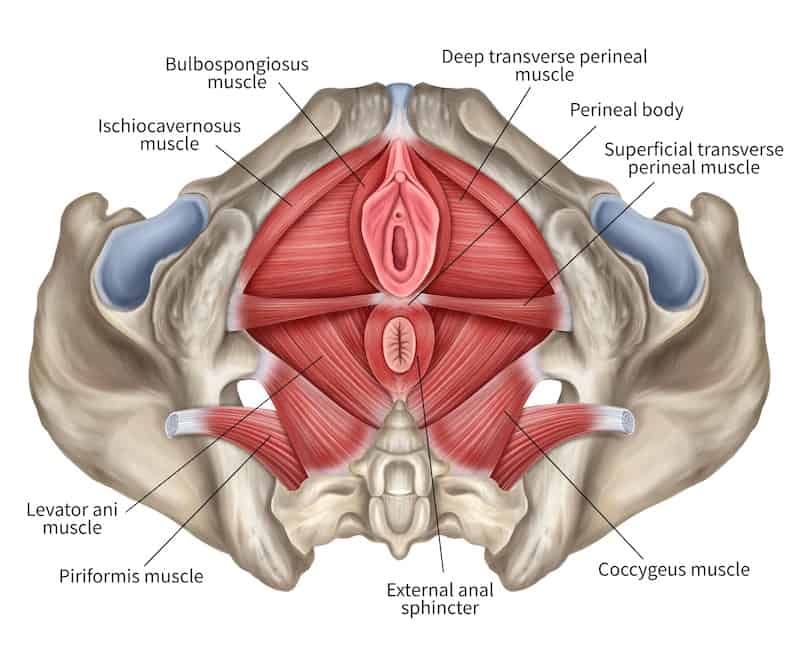
Figure 02 (Credit: thevagwhisperer.com)
Deeper muscles that make up the pelvic ‘sling’, often responsible for deep penetrative pain, hip, back, and abdominal pain referral, and bowel or bladder issues
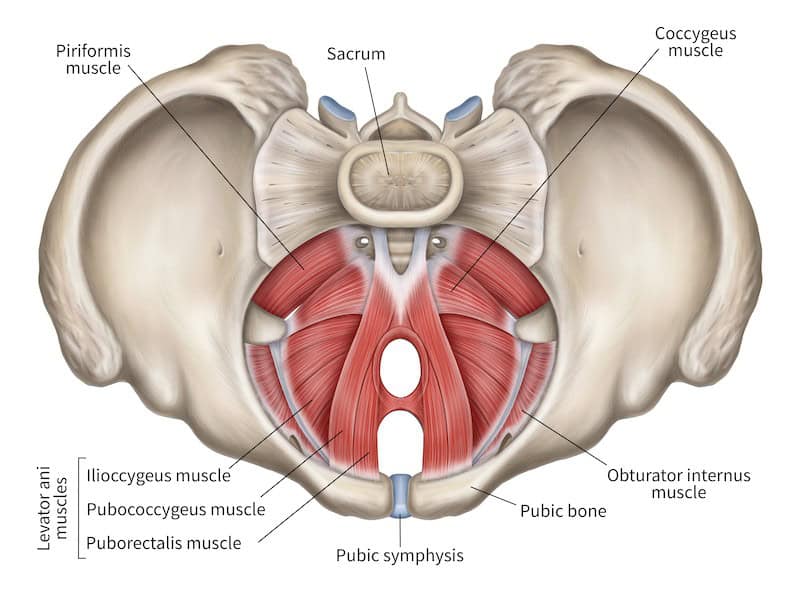
Figure 03 (Credit: thevagwhisperer.com)
Pelvic PT can teach you to both engage and lengthen or relax the pelvic floor muscles depending on your specific needs (5, 6). Kegels aren’t always the right starting point for every patient, so getting individualized assessment and recommendations is important to set you up on the road to recovery!
Scar Massage
Gentle manual work around, not directly on your incision areas can usually be initiated 4-6 weeks post-op once cleared by your surgeon, and direct scar massage can be progressed by weeks 8-12.
While we can see and feel the scar on the outside, it is important to think about that same scar tissue extending to the deeper layers below. Scars that are left to develop and adhere to underlying tissues can disrupt normal function of the core and pelvic floor.
A Pelvic Floor PT can help you perform gentle scar management techniques to improve blood flow to the tissues, reduce tissue tension and restriction, decrease pain and sensitivity to the area, and even improve scar appearance over time (7).
Core Strengthening
As breath mechanics, bowel and bladder health, appropriate pelvic floor excursion, and scar tissue are addressed your next big goal will be to return to the activities that are most meaningful in your daily life. This might be related to work duties, exercise, child care, and home or community activity.
Surgery can effectively turn “off” the mind-muscle connection to your core, making it hard to engage and lend stability for all of those tasks.
It’s important to progress to more strenuous activities that require greater core and pelvic floor strength and coordination gradually to prevent injury or delay in healing (8).
A personalized plan for your specific goals developed by your Pelvic PT will guide you to safely resume pre-op functional activities, hopefully feeling stronger and more confident than you did before your procedure!
Next Steps for Full Recovery
Pelvic PT needs could vary depending on the individual patient- sometimes a short plan of care can set you up for success post-op with greater awareness of next steps and strategies to promote early healing, or a longer plan of care might be necessary for those who have experienced long term dysfunction or have high level goals to return to. This will be thoroughly discussed and mapped out with your Pelvic PT to meet your situation during the initial evaluation. Short or long, a Pelvic PT plan of care will:
- Provide you with greater awareness and understanding of your body’s function
- Teach you strategies for symptom management and healing
- Prepare you to gradually and safely return to full activity goals post-op
It’s also a perfect opportunity for continued collaboration with your surgeon for care long term, with both providers committed to your success after surgery.
Are you ready to work with a specialized Pelvic PT to guide your post-op recovery? Schedule with a MovementX Pelvic Provider in your area today. We’d love to remove the guesswork and support you with a personalized plan to meet your goals safely and successfully after any pelvic procedure.
References
- What to Expect During Pelvic Health Physical Therapy. APTA Pelvic Academy Patient Education. August 27, 2025. Accessed August 16, 2026. https://www.aptapelvichealth.org/info/what-to-expect-during-pelvic-health-physical-therapy
- Talasz H, Kremser C, Talasz HJ, Kofler M, Rudisch A. Breathing, (S)Training and the Pelvic Floor—A Basic Concept. Healthcare. 2022;10(6):1035. doi:10.3390/healthcare10061035
- Liu X, Rong Q, Liu Y, Wang J, Xie B, Ren S. Relationship between high intra-abdominal pressure and compliance of the pelvic floor support system in women without pelvic organ prolapse: A finite element analysis. Frontiers in Medicine. 2022;9. doi:10.3389/fmed.2022.820016
- Lamberti G, Giraudo D, Ciardi G, Levis JK. Pelvic Floor Muscle Training Following Surgery for Pelvic Organ Prolapse: Recommendation from Scientific Literature. Journal of Clinical Medicine. 2026;15(3):1116. doi:10.3390/jcm15031116
- Volpe LJ, Zugelder M, Kotarinos R, Kotarinos E, Kenton K, Geynisman-Tan J. Objective Changes in Pelvic Floor Muscle Strength and Length in Women With High-Tone Pelvic Floor Dysfunction After Pelvic Floor Physical Therapy (RELAX Trial). Urogynecology. 2023;29(11):872-879. doi:10.1097/spv.0000000000001355
- Rátonyi D, Koroknai E, Pákozdy K, et al. The impact of short-term pelvic floor muscle training on the biomechanical parameters of the pelvic floor among patients with stress urinary incontinence: A pilot study. European Journal of Obstetrics & Gynecology and Reproductive Biology. 2024;302:283-287. doi:10.1016/j.ejogrb.2024.09.037
- Gilbert I, Gaudreault N, Gaboury I. Exploring the Effects of Standardized Soft Tissue Mobilization on the Viscoelastic Properties, Pressure Pain Thresholds, and Tactile Pressure Thresholds of the Cesarean Section Scar. Journal of Integrative and Complementary Medicine. 2022;28(4):355-362. doi:10.1089/jicm.2021.0178
- Embaby HM, Ahmed MM, Mohamed GI, et al. Impact of core stability exercises vs. interferential therapy on pelvic floor muscle strength in women with pelvic organ prolapse. 2023;27(4):1255-1261. doi:10.26355/eurrev_202302_31358
- Figure 01 — https://www.empoweryourpelvis.com/blog-1/2019/2/5/how-to-perform-a-kegel-correctly-day-3?srsltid=AfmBOooOZLt8V19S2QLrP0xxfBIXfkZRRN8YvEZOHX-cUQdduA9h0u6e
- Figure 02 — https://thevagwhisperer.com/wp-content/uploads/2020/05/5._Superficial_Pelvic_Floor_Muscles_Superior_View_color2.png
- Figure 03 — https://thevagwhisperer.com/wp-content/uploads/2021/05/7._Deeper_Pelvic_Floor_Muscles_Superior_View_color-2.png
About the Author

Dr. Rachel Noyes Finley is a physical therapist serving Zionsville and the Northwest Indianapolis area. She specializes in a diverse range of conditions, providing expert care for women’s pelvic health, pregnancy and postpartum recovery, complex vestibular and balance disorders, and progressive neurological diseases. As an adjunct faculty member and passionate educator, Rachel believes in meeting patients exactly where they are in their health journey, designing functional treatment strategies tailored to their daily lives and unique environments.
Share This Page
Related Resources
Found this page interesting? Discover more insightful resources below.