


As soon as the algorithms realize you’re expecting, you’re suddenly hit with a flood of information and opinions. From social media, ads, family and friends, neighbors, strangers…it can be overwhelming! At worst, reliance on social media for medical advice during pregnancy can negatively impact your mental health by the third trimester! (1)
Pregnancy can be thought of as training for a sporting event or race. And this means asking questions of how you should prepare, what advice you want to follow, and most importantly, who’s on your team for support before, during and after delivery.

Choose Your Pregnancy Teammates
Each of these providers can play an important role from pregnancy to delivery, but what do they actually do? And when do you need them?
Obstetrician
An obstetrician is a medical doctor specializing in management of pregnancy and childbirth, often the provider who delivers your baby in the hospital. An OB is trained to take care of any medical complications during pregnancy, labor, delivery, or postpartum.
Midwife
A certified nurse midwife (CNM) or certified midwife (CM) supports fertility, pregnancy, delivery, and postpartum care with a focus on low intervention for uncomplicated pregnancies. They may deliver your baby in a hospital, birthing center, or at home.
Doula
A doula is a non-medical provider who focuses on supporting you before, during, and after childbirth but does not physically deliver your baby. Like Midwives, they are often trained in specific techniques to prepare for and improve the birth experience and may be present in the hospital, birthing center, or at home.
Chiropractor
A chiropractor is a licensed professional who uses a hands-on approach to musculoskeletal condition management. During pregnancy, a Webster trained chiropractor specifically utilizes techniques to treat the sacrum and pelvis safely and optimize positioning for birth.
Massage Therapist
A massage therapist is a wellness provider who focuses on soft tissue work, stretching, and relaxation techniques can be a wonderful addition to manage the aches and pains often experienced during pregnancy.
Acupuncturist
Acupuncturists are Traditional Chinese Medicine practitioners trained to use thin sterile needles and acupressure to balance energy and promote healing. They may be able to target morning sickness, fetal positioning, and readiness for labor.
Mental Health Providers
Perinatal mood disorders affect as many as 1 in 4 women (2), and can feel like “invisible” complications during the pre or postpartum period. If you are experiencing depression, anxiety, compulsive behavior, or any other mental health symptoms talk to family, your medical providers, and get a referral to a mental health specialist. You are not alone, and you can get immediate support by calling or texting the PSI Helpline at 1-800-944-4773.
Consider Pelvic PT Your Coach
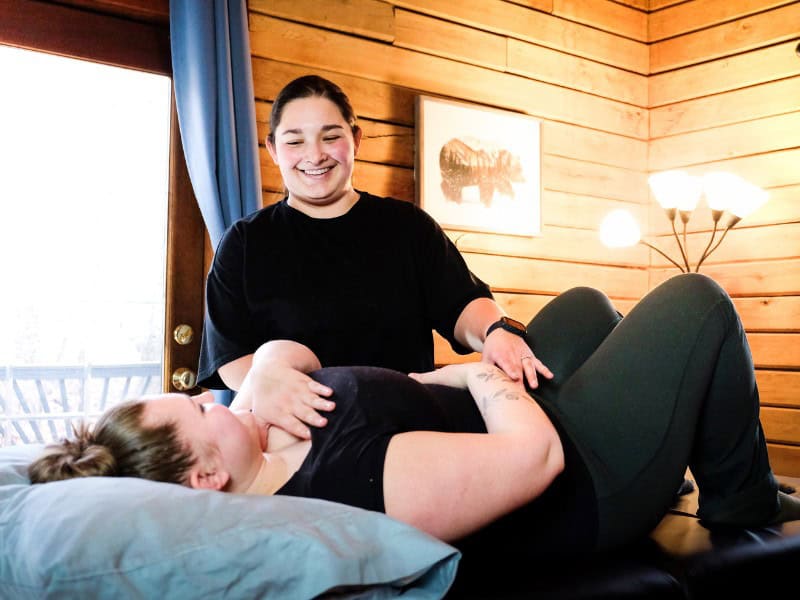
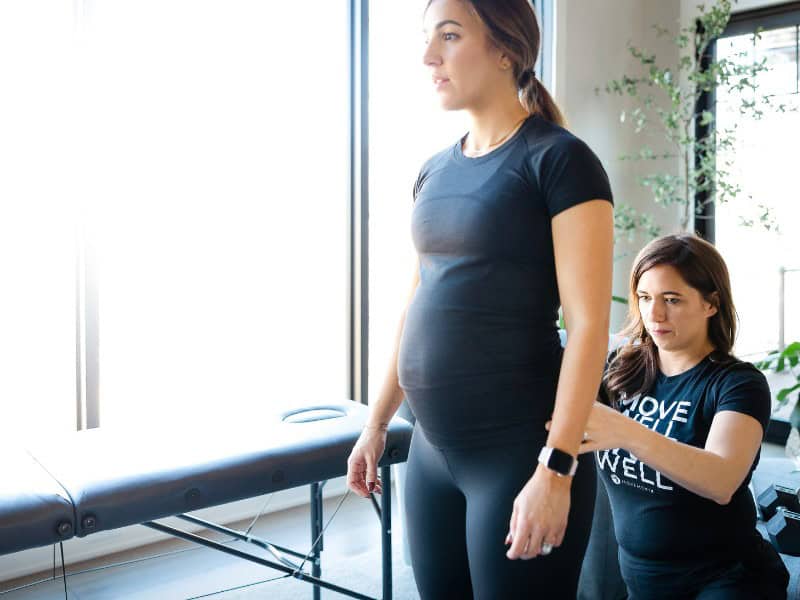
So, where does a Pelvic Physical Therapist (like me and others at MovementX) fit into this team? Think of us as facilitator-coaches who help ensure all the players are communicating and seeing you at optimal times to ensure your confidence and success.
The goal is a multi-disciplinary approach with complementary skillsets and services provided by the team, and a pelvic-floor trained physical therapist can help you build the team and support you through any of the following:
Orthopedic Pain
Common complaints during pregnancy include low back pain, SI joint pain, pubic symphysis dysfunction, or round ligament pain. All can be managed effectively with specific movement strategies and personalized exercises.
As your body and hormones fluctuate throughout pregnancy, symptom location and severity can change, so having a trusted Pelvic PT to regularly check in with or see quickly when needed is a great way to manage all of those transitions.
Promoting an active pregnancy not limited by pain supports your health and can actually shorten active labor. (3) It may even help to see a chiropractor, massage therapist, or acupuncturist in conjunction with PT for some of these conditions.
Pelvic Floor Dysfunction
You might notice urinary urgency or leaking with exercise or cough/sneeze, bowel changes (often related to hormones), or even pain with intimacy or certain activities.
Pelvic PTs are trained to assess what your pelvic floor muscles are actually doing and teach you how to strengthen, lengthen, or coordinate effectively to address issues (4).
Your Pelvic PT can even let your midwife or doula know exactly what positions and techniques might be most helpful during labor based on the tone and function of specific areas of your pelvic floor. A pelvic floor assessment can be performed internally or externally depending on your comfort level, stage of pregnancy, and specific conversations with your Pelvic PT.
Prevention of Tearing
While first and second degree tears involving the skin and superficial pelvic floor muscle layers are not uncommon, our big goal is to avoid more serious third and fourth degree lacerations that can contribute to long term issues like urine or stool incontinence, painful scar tissue, or even prolapse.
Luckily research shows that perineal massage taught by your Pelvic PT during pregnancy can be helpful to prevent those higher degree injuries (5), and can help with your body awareness of pelvic floor relaxation or learning to “let go” to smoothly deliver your baby.
Labor and “Push” Prep
This is where the specialized Pelvic PT skillset really shines. Once we are able to assess the function of your pelvic floor and maximize the mobility of your ribcage, spine, hips, and pelvis, we can help you to facilitate effective pushing techniques to determine which positions are best for you to feel strong and in tune with your body.
Many women actually tense when they think they are pushing during labor and delivery and this can prolong active labor (6).
Working with a Pelvic PT and the rest of your pregnancy team lets you practice with real-time feedback to develop that muscle memory prior to the big day.
Postpartum Recovery
After your big day recovery and return to the things that make you you are a priority, too, to show up best for yourself and your baby.
Any symptoms that linger, return, or start following delivery can be addressed by your Pelvic PT (who you probably already know and trust).
And MovementX Pelvic PTs can come right to your home without disruption to your routine with your baby.
Approach Your Big Day with Confidence
You’ve developed your collaborative team. You have a specialized Pelvic PT making sure you feel prepared in pregnancy and ready to support your postpartum recovery.
You know which exercises keep you out of pain and staying active, what positions you feel strongest to push in, and exactly who to reach out to along the way. You are ready to tackle the expected and unexpected aspects of delivery with your team!
If you’re ready to get started with Pelvic PT during pregnancy and want help assembling an all star team, schedule with a MovementX Pelvic Provider in your area today. I and other members of our team would love to support you during pregnancy, prepare you for delivery, and maximize your postpartum recovery.
References
- Huddleston R, Julian-Kwong M, Cedars MI, et al. The association between social media for medical information during pregnancy on maternal mental health at the end of the third trimester. Arch Womens Ment Health. 2025;28(5):1335-1340. doi:10.1007/s00737-025-01608-8
- Zivin K, Courant A. Disparities in Utilization and Delivery Outcomes for Women with Perinatal Mood and Anxiety Disorders. J Psychiatry Brain Sci. 2024;9:e240003. https://doi.org/10.20900/jpbs.20240003
- Watkins VY, O’Donnell CM, Perez M, et al. The impact of physical activity during pregnancy on labor and delivery. Am J Obstet Gynecol. 2021;225(4):437.e1-437.e8. doi:10.1016/j.ajog.2021.05.036
- Ren, S., Gao, Y., Yang, Z., Li, J., Xuan, R., Liu, J., Chen, X. and Thirupathi, A. (2020) ‘The Effect of Pelvic Floor Muscle Training on Pelvic Floor Dysfunction in Pregnant and Postpartum Women’, <i>Physical Activity and Health</i>, 4(1), p. 130–141. Available at: https://doi.org/10.5334/paah.64.
- Venugopal V, Deenadayalan B, Maheshkumar K, et al. Perineal Massage for Prevention of Perineal Trauma and Episiotomy During Labor: A Systematic Review and Meta-Analysis. J Family Reprod Health. 2022;16(3):162-169. doi:10.18502/jfrh.v16i3.10575
- Youssef A, Montaguti E, Dodaro MG, Kamel R, Rizzo N, Pilu G. Levator ani muscle coactivation at term is associated with longer second stage of labor in nulliparous women. Ultrasound Obstet Gynecol. 2019 May;53(5):686-692. doi: 10.1002/uog.20159. Epub 2019 Apr 2. PMID: 30353589.
About the Author

Dr. Rachel Noyes Finley is a physical therapist serving Zionsville and the Northwest Indianapolis area. She specializes in a diverse range of conditions, providing expert care for women’s pelvic health, pregnancy and postpartum recovery, complex vestibular and balance disorders, and progressive neurological diseases. As an adjunct faculty member and passionate educator, Rachel believes in meeting patients exactly where they are in their health journey, designing functional treatment strategies tailored to their daily lives and unique environments.
Share This Page
Related Resources
Found this page interesting? Discover more insightful resources below.