


So it happened. You fell off your bike and tore a ligament, or you took a nasty fall skiing and tore your ACL. The doctor ordered an MRI and dropped the news you didn’t want to hear: surgery. You didn’t want it, but you knew it had to be done.
Fast forward: The surgery went well. At your post-op appointment, the doctor says everything looks great. “Keep doing your PT,” they say. And you do. Twice a week, you’re at the clinic doing your leg lifts, counting your reps, and getting a bit better.
Then, 6 or 8 weeks later, you are back to your daily routine. You’re working from home or even commuting into the office. But that knee or shoulder is still bothering you. It’s not terrible (you could live with the occasional ache) but you want to get better than just “functional.”
You want to be back on the bike training for a century ride. You want to be back on the ski slope headed down a black diamond run. But right now? That feels miles away.
To make matters worse, you’ve started to notice an ache in your back. It wasn’t there before surgery, but now it’s nagging you regularly. It seems like getting back to high-level activities is going to be harder than you thought.
But it doesn’t have to be.
The Missing Link: Manual Therapy
If your recovery feels stalled, it might be time to add a “secret weapon”: Manual Physical Therapy.
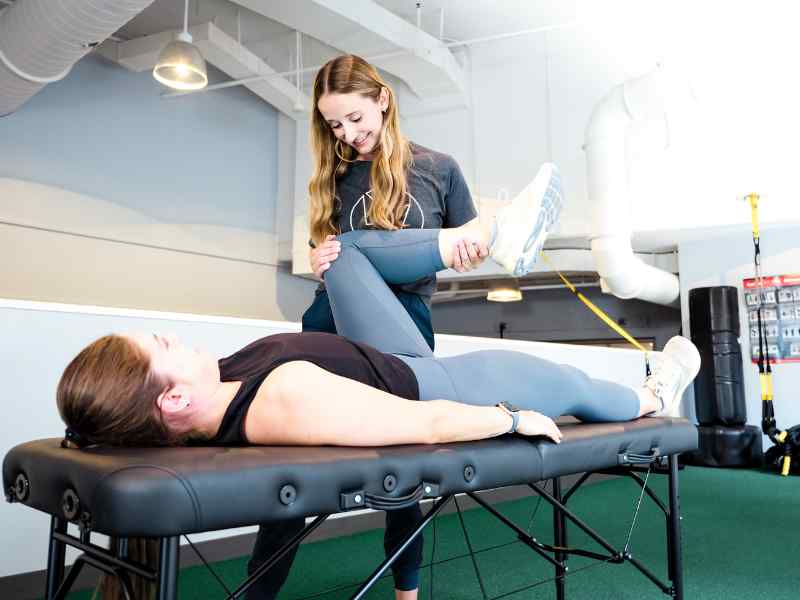
This approach will level up your rehab and help you reach those high-level goals you seek. Manual therapy isn’t just a “massage.” It is a system of specialized, hands-on techniques used by trained physical therapists to mobilize joints, release tissue tension, and normalize movement patterns.
Here is the hard truth: These results rarely happen with simple strengthening exercises alone.
If you are trying to strengthen a muscle that is inhibited by a stiff joint or trapped by scar tissue, you are driving with the parking brake on. Manual therapy releases that brake. It frees up restrictions to motion and makes moving the post-op body part much easier. With better movement, the strength exercises you are doing become infinitely more effective. Muscles can contract more easily and efficiently when they are not fighting against resistance in the form of joint restrictions or soft tissue adhesions.
The Science: Why “Pushing Through” Doesn’t Work
To understand why you need hands-on care, you have to understand what happens under your skin after surgery.
When a surgeon cuts into tissue, your body heals by laying down collagen. This is the building block of repair. However, your body doesn’t lay this collagen down in neat, organized lines like the original tissue. It lays it down like a messy pile of spaghetti—this is scar tissue (fibrosis).
If left untreated, this “messy” collagen acts like glue. It sticks layers of muscle, fascia, and skin together that are supposed to slide past each other.
The Problem: No amount of leg lifts will untangle that microscopic “spaghetti.” In fact, exercising aggressively on top of disorganized tissue can sometimes increase inflammation.
The Manual Solution: Skilled manual therapy applies specific mechanical forces to the tissue. We use our hands to guide the collagen fibers to align along the lines of stress. This turns that “messy pile” into a flexible, strong, organized structure.
Supercharging Your Pain Management
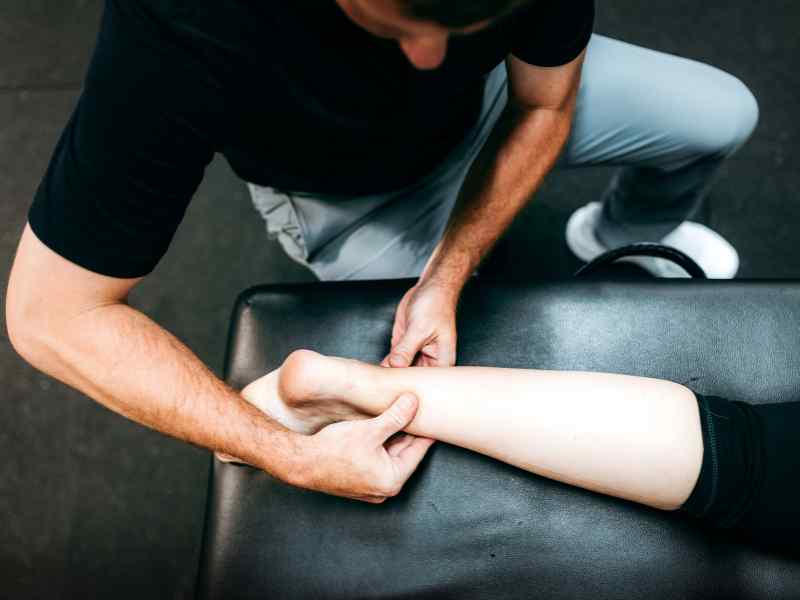
Manual therapy can also supercharge your pain management. Trying to move a joint that is chemically or mechanically “stuck” is significantly more painful than moving one that glides freely.
A study on Total Knee Arthroplasty (TKA) demonstrated that patients who received a combination of manual therapy and exercise experienced significantly better outcomes than those who did exercise alone. The manual therapy group reported improved pain, better function, and higher patient satisfaction. (Source: Karaborklu et al. “The Combination of Exercise and Manual Therapy …)
Why? Because a PT performing manual therapy can loosen stiff fascia or tight joint capsules that you are unknowingly fighting against every time you try to squat or take a full stride.
Think of your joint like a door hinge. If the hinge is rusty (stiff/swollen), pushing on the door (exercise) just stresses the wood. Manual therapy “oils the hinge” first. Once the hinge is moving, the door opens effortlessly. These motions become easier after releases from manual therapy, and far less painful!
Specific Recoveries: How We Help Your Surgery
General advice is helpful, but every surgery has unique “sticking points.” Here is how manual therapy targets the specific hurdles of common surgeries.
1. The ACL Reconstruction
The battle here isn’t just bending the knee; it’s getting it straight.
The Hurdle: After ACL surgery, the hamstrings often go into a protective spasm (guarding), keeping the knee slightly bent. If you don’t get full extension back quickly, you risk a permanent limp.
The Manual Fix: We use soft tissue mobilization to release the hamstring spasm and “patellar mobilizations” (moving the kneecap) to ensure the mechanics of the knee allow for full straightening. You simply cannot stretch a guarded hamstring effectively on your own; it needs to be coaxed into relaxing manually.
2. The Rotator Cuff Repair
The shoulder is a complex ball-and-socket joint that relies on a delicate balance.
The Hurdle: Fear of pain often causes patients to “hike” their shoulder (shrug) every time they try to lift their arm. This overuse of the upper trapezius muscle causes neck pain and headaches.
The Manual Fix: We use “Passive Range of Motion” (PROM) where we support the weight of your arm completely. This teaches your nervous system that it is safe to move the shoulder joint without hiking the shoulder blade. We also mobilize the thoracic spine (upper back) because if your back is stiff, your shoulder physically cannot reach overhead.
3. Total Joint Replacements (Knee or Hip)
The Hurdle: Swelling is the enemy here. Fluid build-up creates pressure that physically blocks motion.
The Manual Fix: We utilize manual lymphatic drainage techniques to clear fluid faster than ice alone can. Furthermore, we mobilize the scar incision itself. Once the incision is healed, keeping that skin mobile is vital so it doesn’t adhere to the bone underneath, which is a common cause of lingering sensitivity.
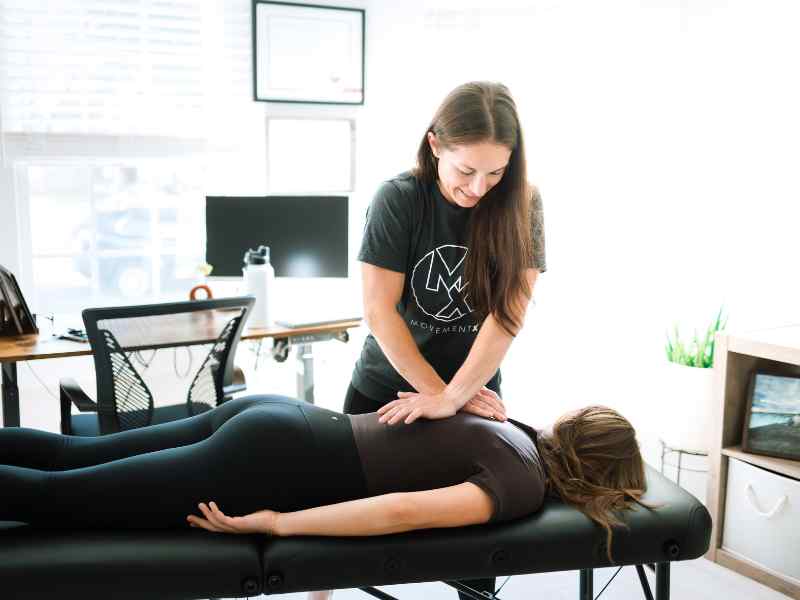
The Full Body Assessment: Why Your Back Hurts
Once the specific surgical area is “unlocked” and motion is easier, the next part of optimizing the process is a full body assessment.
Nothing in the body functions in isolation. Although time spent lying on the couch during recovery is necessary, it doesn’t do good things for the rest of your body. You experience muscle atrophy (wasting) and joint stiffness in areas far from the surgical site—commonly the low back or pelvis.
Sometimes, manual work on these “secondary” areas makes moving much more comfortable. That pristine, surgically repaired knee won’t matter if your low back is hurting so badly you don’t feel like walking.
This happens because of Compensatory Movement Patterns. Without you even realizing it, your brain creates “cheats” to avoid pain. You might:
- Walk with a shorter stride on one side.
- Stand with all your weight on your “good” leg.
- Twist your torso to avoid rotating a stiff hip.
Your body tries to find the path of least resistance. Sometimes you will naturally revert to normal movement patterns—but often, these bad habits stick around long after the surgery has healed. It takes a PT’s trained eye to point out what is happening and their hands to correct it. A cue as simple as “make sure your right foot faces forward” can realign your entire ankle, knee, hip, and pelvis chain.
Conquering the “Fear Factor” (Kinesiophobia)
Let’s address the elephant in the room: Fear.
After a traumatic injury and invasive surgery, your brain is on high alert. This is called Kinesiophobia—the fear of movement. Your nervous system effectively turns the volume knob on your pain receptors all the way up. It thinks it is protecting you, but it’s actually hindering you.
Many patients hesitate to see a manual therapist because they think, “It’s going to hurt.”
The reality is actually the opposite. Safe, professional touch is the best way to down-regulate a panicked nervous system. When a therapist supports your limb and moves it gently within a safe range, it sends a signal to the brain: “See? We moved, and nothing bad happened.”
We don’t force joints. We don’t rip through scar tissue. We work with your nervous system. This builds confidence. And when you are confident, you move more. When you move more, you heal faster.
Don’t Settle for “Functional”
There is a difference between your knee being “fixed” and you being fully recovered.
- Fixed means the structures are repaired.
- Recovered means you are back on the black diamond run, trusting your body 100%.
If you are feeling stuck, stiff, or just unsure if you’re making the right progress, you don’t have to guess. You need a hands-on approach to clear the hurdles that exercise alone can’t touch.
Are you ready to stop “getting by” and start performing? Don’t let stiffness become your new normal.
Schedule your evaluation today and let’s get your body moving the way it was designed to.
About the Author

Sarah Reeve, MPT is a Master of Physical Therapy based in Cary and Apex, North Carolina, with over 20 years of clinical experience. She treats a diverse population ranging from youth athletes and runners to active adults and elderly individuals managing chronic conditions or orthopedic injuries. Sarah believes effective care stems from treating the individual rather than just the diagnosis, utilizing a combination of skilled manual therapy and personalized exercise programs.
Share This Page
Related Resources
Found this page interesting? Discover more insightful resources below.