


You know the feeling. You start your day with good posture and good intentions… but a few hours into back-to-back Zoom calls, a full inbox, and deadlines that won’t slow down, your shoulders have crept toward your ears, your neck feels stiff, and there’s a dull ache sitting between your shoulder blades. By the afternoon, you’re stretching (hopefully), moving your neck, pressing your thumbs into the tight spots, anything for a little relief.
If you’re a busy professional who spends most of the day at a desk, this kind of discomfort isn’t unusual. But that doesn’t mean it’s normal. And it definitely doesn’t mean you have to live with it.
One of the most effective tools we use is dry needling. We’ll break down what it is, why it works, when it’s appropriate, and how it can help you finally feel relief in your neck and/or upper back.

Why Desk Work Causes So Much Neck and Back Pain
Let’s start with what’s happening.
Most professionals don’t realize how physically demanding office work can be on the musculoskeletal system. It’s not lifting or sprinting that causes your issues; it’s just staying still. Hours of sitting creates a cycle of tension, muscle guarding, and movement avoidance that leads to pain.
Here’s what’s going on:
1. You’re Locked in a Static Position
Even if your posture is decent, holding one position for hours at a time creates fatigue in the muscles that stabilize your head, neck, and shoulder blades. Over time, these muscles become stiff, overworked, and sensitive.
2. Upper Traps and Neck Extensors Work Overtime
Your head is heavy, weighing about 10–12 pounds (imagine holding a 12lb weight in your hand ALL day, crazy right?). Every inch your head moves forward from neutral adds mechanical load to the muscles at the base of your skull and the top of your shoulders. This is why people often feel:
- A burning sensation in the upper traps
- Tightness at the base of the neck
- Headaches that wrap around the temples or behind the eyes
3. The Upper Back Works Hard While the Mid Back Takes a Nap
Your thoracic spine is meant to twist, rotate, extend. Prolonged sitting keeps you frozen. When the mid-back stiffens, it forces the upper back and neck to compensate even more.
Cue pain.
4. Stress Intensifies Muscle Tension
Work demands, deadlines, and nonstop cognitive load increase sympathetic nervous system activity. In simpler terms, stress makes your muscles contract and stay contracted.
You don’t just feel stress, your body can hold it.
5. Finally: Movement Drops to (Almost) Zero
When you’re busy, it’s easy to go an entire morning without changing your position much. Less movement means:
- Less blood flow
- Less tissue oxygenation
- More stiffness
- More discomfort
This creates the perfect environment for muscle knots (A.K.A. trigger points) which is just stubborn muscular tension.

What Is Dry Needling? (And What It Isn’t)
Now that you know why things hurt, let’s talk about one of the fastest ways to improve it.
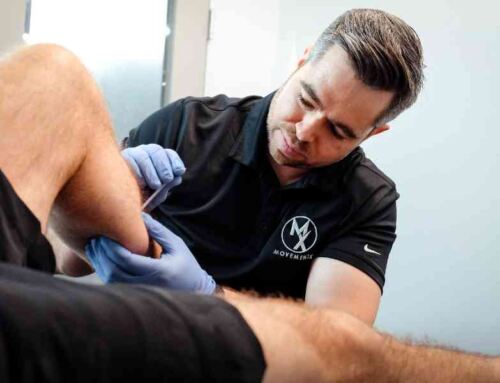
Dry needling is a treatment technique physical therapists use to reduce muscle tension, improve mobility, and decrease pain. It involves inserting a thin, sterile filament needle placed into a tight band of muscle (into those knots/trigger points) to cause a therapeutic release.
Dry needling is often paired with electrical stimulation (e-stim) when appropriate. Low-level electrical current is applied through the needles to help muscles reduce guarding, especially in areas that have been tight for a long time.
Here’s what dry needling is:
- A skilled, evidence-supported technique performed by trained clinicians
- A way to decrease muscle tension and sensitivity
- A method to improve movement and reduce pain quickly
- A complement to strengthening, mobility, and postural training
And here’s what dry needling is not:
- It’s not acupuncture (different training, different intent)
- It’s not a standalone cure
- It’s not just about poking your muscles, for the sake of it, it’s part of a targeted treatment plan
The goal? Restore normal muscle tone, improve blood flow, and give your body the capacity to move without pain.
How Dry Needling Helps Desk-Related Pain
Dry needling is especially effective for neck, shoulder, and upper-back pain because these areas tend to develop very predictable patterns of tension. Busy professionals often present with tightness in muscles such as:
- Upper trapezius
- Levator scapulae
- Cervical paraspinals
- Rhomboids
- Infraspinatus
- Pec minor
- Upper thoracic extensors
These muscles often form taut bands that restrict movement and contribute to that familiar “knot” or “pinch” sensation.
Dry needling helps by:
1. Releasing Trigger Points
Trigger points contain shortened and contracted muscle fibers. Needling disrupts this contraction cycle and allows the muscle to relax.
2. Improving Blood Flow
A quick twitch response increases local circulation, bringing oxygen and nutrients to previously stagnant tissue.
3. Reducing Pain Signaling
Dry needling affects the spinal cord and brain’s perception of pain. It helps “turn down the volume” of overactive pain pathways.
4. Restoring Normal Muscle Function
Once tension is reduced, exercises and mobility work become far more effective. Your neck and shoulder muscles can finally move the way they’re supposed to.
5. Helping Your Body Break the Cycle of Stiffness
Less muscle guarding = better posture = less pain.
Frequently Asked Questions About Dry Needling
Does dry needling hurt?
You may feel a quick twitch or deep ache, but people find it very tolerable and even relieving.
How quickly will I feel better?
Many people notice immediate improvements in mobility and tension. Pain relief typically builds over 24–48 hours. Sometimes multiple sessions are needed.
Is it safe?
Yes, when performed by a trained and licensed physical therapist. MovementX clinicians follow strict safety protocols.
How long does a session take?
A typical dry needling session may take just a few minutes per muscle This all takes place within a typical 60 minute PT appointment, focused on pre- and post-treatment movement assessments.
Do I still need exercises?
Absolutely. Dry needling opens the window for better movement; exercise keeps that window open.
You Don’t Have to Live With Daily Neck and Shoulder Tension
You work hard. You grind through long days of meetings, tackle big projects, and spend hours at your desk because your job demands it. But that doesn’t mean you have to accept chronic neck, shoulder, or upper-back pain as part of the package.
Dry needling is a fast, effective way to reduce tension, improve mobility, and help your body feel normal again. When combined with the right exercises and ergonomic habits, it becomes a powerful tool for long-term relief.
If you’re tired of stretching the same tight spots over and over, or if your daily neck and shoulder pain is starting to affect your focus, sleep, or productivity; we can help.
Book a session and feel the difference dry needling can make for you.
References
- Dommerholt J, Grieve R, Layton M, Hooks T. Critical review of the current trends in dry needling for myofascial pain. J Manual Manipulative Ther. 2015;23(3):126–143.
- Gattie E, Cleland JA, Snodgrass S. The effectiveness of trigger point dry needling for musculoskeletal conditions by physical therapists: A systematic review and meta-analysis. J Orthop Sports Phys Ther. 2021;51(8):400–418.
- Kietrys DM, Palombaro KM, Azzaretto E, et al. Effectiveness of dry needling for upper-quarter myofascial pain: A systematic review and meta-analysis. J Orthop Sports Phys Ther. 2013;43(9):620–634.
- Boyles RE, Fowler R, Ramsey D, Burrows E. Effectiveness of trigger point dry needling for musculoskeletal conditions: A systematic review. J Orthop Sports Phys Ther. 2015;45(1):11–23.
About the Author

Dr. Cesar Laboy is a physical therapist serving the DMV area and specializing in treating runners, weight lifters, athletes, busy professionals, active adults, and post-operative patients. He is passionate about utilizing 1-on-1 individualized care to support his patients and ensuring his clients have a convenient and efficient PT experience.
Share This Page
Related Resources
Found this page interesting? Discover more insightful resources below.